FM Education
An August of Remembrance: Emmett Till, the March on Washington and Hurricane Katrina

According to some weather reports the last week in August is the hottest week of the year. Temperatures across the country soar into the 90s, bolstered by a brutal sun. The heat saps the life out of people. So we swelter. We wait for the Labor Day weekend to come, giving us a chance to cool off at the lake. We enjoy the long weekend. And though we sit in the shade, sheltered from the scorch, history still happens. In fact, in the last week of August, history has been known to turn on its head. When it does, our world changes and a new chapter of the story is written.
There is a lot to remember about the last week of August: the brutal slaying of an innocent fourteen-year old boy in Mississippi. In Washington DC, a quarter of a million people marched to the Lincoln Memorial to hear a great man deliver one of the most profound speeches in American history. A hurricane dubbed the “storm that most of us have long feared” ravaged the Gulf Coast, saving its worst for Louisiana and the city of New Orleans. Now, we take a look back at the anniversaries of the death of Emmet Till, the 1963 March on Washington and Hurricane Katrina.
August 28, 1955: Emmett Till
It took place in a barn in Drew, Mississippi. That was where Roy Bryant and J.W. Milam beat, tortured and mutilated fourteen-year old Emmett Till. He was then taken, disfigured and barely alive, to the Tallahatchie River where he was shot, his body dumped in the waters. His only “crime” being that he may have whistled at a white grocery store worker, 21-year old Carolyn Bryant, wife to Roy.
Under the dehumanizing social system of the Jim Crow south, lynching had gone on for decades. The murder of Emmet Till changed everything.

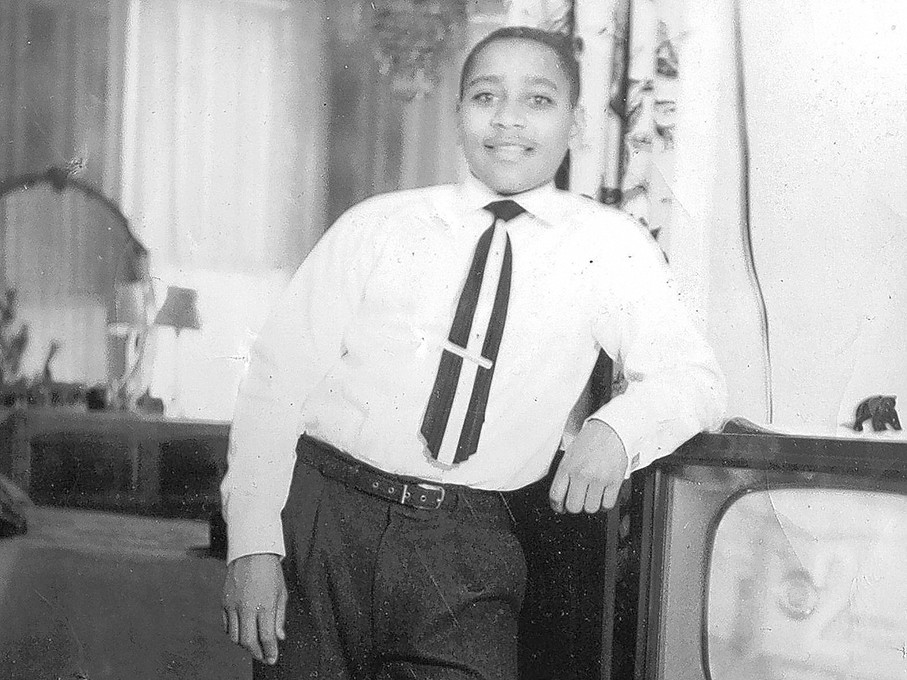
Emmett Till, c. 1955. Via “The Murder of Emmett Till”.
Upon news of Till’s murder, the nation was horrified. Soon, Bryant and Milam would be acquitted of all charges by an all-white jury, taking just sixty-seven minutes to deliberate. The country now knew it had a problem. To showcase the true horror of it, Till’s mother had an open casket funeral. Indeed, when asked what her inspiration was behind her refusal to move, Rosa Parks stated:
“I thought of Emmett Till and I just couldn’t go back.”
From there, the protests, movements and marches came forth. Till’s murder brought civil rights to the forefront of American life. Nine years shy of his murder, in July of 1964, the Civil Rights Act of 1964 was passed.
Today, Emmett Till is seen as one of the most profound, tragic, and important figures in the civil rights movement. His name lives on in schools, roads, highways, buildings, legislation, film, books and so much more. Notable is the plaque by the Tallahatchie River honoring Till. As a sign of America’s ever-present racism, the sign has been continuously vandalized since 2008. In 2019, the sign was even bulletproofed.
August 28, 1963: The March on Washington
Officially “The March on Washington for Jobs and Freedom”, the demonstration was a long time coming. Though African-Americans had nominal freedom since 1863, much had been done to stall further progress. Within thirty years, Jim Crow dominated the South and the way ahead for African Americans looked painful and uncertain. By the 1960s, social, economic and professional discrimination had continued to go unaddressed, so a response was proposed: march on the capitol.
The brainchild of A. Philip Randolph and Bayard Rustin, the march called for many proposed changes. To summarize: meaningful civil rights legislation, protections for workers all of races, an end to legalized discrimination, and the establishment of a $2 minimum wage.
On August 28, more than a quarter of a million marchers descended upon the national mall. Washington was electrified by one of the largest rallies in US history. The speakers that day included: Randolph, labor leader Walter Reuther, future Georgia Representative John Lewis, civil rights journalist Daisy Bates, and of course, Dr. Martin Luther King, Jr. It was there that MLK delivered his “I Have A Dream” speech, now a cornerstone of U.S. history.

Coming away from the march, liberals and conservatives alike rallied behind Dr. King. Many saw King’s speech as the main event. Nearly sixty years later, this is the narrative. But in terms of success, there is still much to be done. While a nation was awoken, the economic problems remained. To this day, the core issues have yet to be fully addressed.
Yet the march continues. Last Saturday, another march was held in commemoration of the first, with over fifty thousand people in attendance.
August 28-30, 2005: Hurricane Katrina
Southeast of the Bahamas, a monster took form. It was born on August 23, 2005, and by the time it breathed it’s last on August 30, the Gulf Coast would be forever changed.
On August 28, at around six o’clock in the morning, Katrina made landfall near the Louisiana-Mississippi border. As is bore down on New Orleans, the flood walls burst. In all, some fifty-three breaches were reported, submerging 80% of the city. Across Louisiana and Mississippi, winds were clocked at 150 mph. Rain fell up to fifteen inches in some places. Hundreds of thousands lost power, homes, possessions and their lives. Within twenty four-hours, more than a thousand residents of New Orleans had died. Another three hundred died throughout Mississippi.


New Orleans, Sept. 11, 2005. Courtesy of NOAA.
In the short term, tens of thousands were made homeless. The devastation was immense. Roads, bridges, streets were unusable or destroyed. The economic costs were only matched by Hurricane Harvey in 2017. In the long term, a people lost their city. After Katrina, the Black population in the city fell from 66% to 59%.
Take the Lower Ninth Ward. Devastated by the storm, the mostly African-American ward was effectively given up for lost by city leadership. All over New Orleans, a similar scene played out: the poorer African-American population fled, white professional and business owners moved in, and gentrification took hold. Already existing problems of inequality were infinitely worsened.
Today, the people of New Orleans strive on. The city known as “The Big Easy” has held its ground in the sixteen years since Katrina. Even now, as Hurricane Ida rages through, the levees are holding this time.
Click here to stay up-to-date on the latest stories with FMHipHop.
Written by Garrett C. Owen